{{ current + 1 }}/{{ total }}

The March Amnesty

Full amnesty was granted to all political and religious convicts by the Provisional Government in its very first regulatory act titled ‘Declaration of the Provisional Government on its Composition and Objectives’. The release order was issued a few days later, on March 7. Interestingly, it was the first time the term “amnesty” ever appeared in Russian legislation – previously, the term ‘pardon’ had been used.

The amnesty applied even to those who had been convicted on terrorism-related charges and of so-called ‘agrarian’ crimes, which often involved causing public disorder and destroying property, such as setting fire to country estates. 

As a result of the amnesty, many prominent revolutionaries were released from prison, including those serving life sentences, such as the famous anarchist Nestor Makhno.
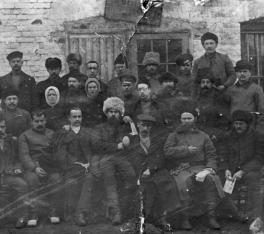
A military brigade of former prisoners of Shlisselburg prison. They were set free by the decision of the Revolutionary Committee of the Shlisselburg Powder Mill on March 1, 1917. Team's brigade F.A. Shavishvili is third left.  Sputnik
A military brigade of former prisoners of Shlisselburg prison. They were set free by the decision of the Revolutionary Committee of the Shlisselburg Powder Mill on March 1, 1917. Team's brigade F.A. Shavishvili is third left. Sputnik
{{ current + 1 }}/{{ total }}

Those released under that amnesty were soon dubbed “Kerensky’s nestlings,” as Kerensky was head of the Department of Justice at the time.

Organizing the return of freed convicts from their places of incarceration, especially remote ones, became a big problem due to a shortage of funds. Though the government ordered that funds be allocated to facilitate this, the money actually available proved insufficient to execute the order. Railways, in turn, refused to ship the ex-convicts for free, prompting a number of NGOs to launch fund-raising drives to help pay for the freed prisoners’ return.

The amnesty also made it possible for many political emigrants previously outlawed and persecuted by the tsarist regime to return to Russia, including prominent figures such as Lenin and Trotsky.

A total of over 80 thousand people were freed thanks to the amnesty. However, of these, only five thousand had been imprisoned on political charges and, thus, crime rates soared after the February Revolution.